
Why Miami’s Top Commercial Photographers Are Ditching Rental Backdrops for Custom-Built Sets
- 2 days ago
- 5 min read
Updated: 49 minutes ago
Miami's commercial photography scene runs on distinct demands. The city's visual economy—fueled by fashion, hospitality, luxury real estate, and a booming Latin American and Caribbean market—needs imagery that doesn't just look good but looks different. Yet too many productions still begin the same way: scrolling through rental catalogs of muslin backdrops, paper rolls, and modular wall panels that have been used on a dozen shoots before yours.
A quiet shift is underway. Across Wynwood studios, Coral Gables commercial spaces, and downtown production houses, photographers and creative directors are stepping away from generic rentals and turning to custom-built environments for commercial shoots. Here’s why the math has changed, especially in Miami.
The Real Cost of “Good Enough” Backdrops
Rental backdrops promise speed and convenience. But in a city where visual differentiation drives everything from luxury condo sales to restaurant reservations, the hidden costs pile up fast.
1. Miami’s Visual Market Saturation
Thousands of professional photography businesses operate across the Miami metro area. Add the influx of international fashion and e‑commerce brands using the city as a winter production hub, and the competition for attention becomes staggering.
When you shoot on the same crinkled “concrete texture” or “tropical foliage” backdrop that three other brands shot on last week, your imagery blends into the noise. A professionally built scenic environment eliminates that risk entirely—no one else has your wall texture, your lighting angles, or your branded color integration.



2. South Florida’s Climate vs. Rental Inventory
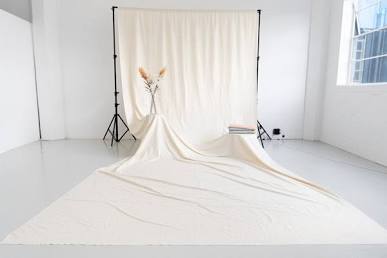
Humidity in Miami is high year‑round, often climbing above 80% in summer. Rental backdrops—especially painted muslins and paper rolls—absorb moisture, warp, and develop mildew spots that are invisible until they hit your high‑res sensor. Even well‑maintained rental houses struggle to keep inventory pristine in these conditions. (See Miami's climate data for context.)
Custom sets, built with climate‑appropriate materials (sealed MDF, treated lumber, moisture‑resistant paints), don't have that problem. They arrive on set as dry and flawless as the day they were fabricated.
3. Space Constraints in Miami Studios
Many of Miami's most in‑demand photo studios—particularly in Wynwood, Little Haiti, and the Design District—operate in converted warehouses with irregular ceiling heights, exposed beams, and non‑standard floor dimensions. Standard 12‑foot rental backdrops don't always fit. You're left cropping in‑camera or fixing awkward cutoff lines in post.
A custom set construction approach solves this before the first light stand goes up. Sets are built to the exact measurements of your shooting space, whether it’s a low-ceilinged MiMo district studio or a sprawling Doral production facility.

Deep Dive: What Miami’s Productions Actually Need
Understanding the local market means looking beyond backdrop choices. Miami's commercial photography economy breaks down into a few key verticals, each with unique set demands that rentals can't satisfy.
Fashion & Swimwear
Miami Swim Week alone generates hundreds of shoots annually, pulling in brands from Brazil, Colombia, Europe, and beyond. These productions don't just need backdrops—they need immersive brand environments. Textured terracotta walls for an eco‑conscious brand, or a sleek, futuristic Miami penthouse set for a high‑end designer.
Rental backdrops can approximate a single wall. They can’t give you a full corner build with integrated practical lighting, flooring, and branding elements. Experienced scenic fabricators can deliver exactly that—environments, not just backgrounds.
Hospitality & Restaurant Marketing
Miami's restaurant scene is fiercely competitive. Food and beverage photography demands sets that look like the real dining environment—or better. A rental "brick wall" backdrop doesn't capture the specific warmth of an actual Miami restaurant interior.
Custom builds let photography teams replicate a restaurant's true ambiance, build a stylized version for menu shoots, or create entirely aspirational dining settings that elevate the brand. No rental catalog offers "Art Deco diner at golden hour with original terrazzo floor." Custom does.

Real Estate & Architectural Photography
Miami's luxury real estate market is one of the most visually competitive in the U.S. Developers and agents need property photography that communicates lifestyle—not just square footage. Empty rooms shot against blank walls don't sell multimillion‑dollar penthouses.
Custom staging sets—fabricated to evoke lived‑in elegance—transform vacant spaces into aspirational homes. They can be built modularly, reused across multiple listings, and tailored to specific buyer demographics. This level of targeting goes far beyond what rental furniture and generic backdrops provide.
Latin American & Caribbean Brand Campaigns
Miami serves as the U.S. production hub for many Latin American and Caribbean brands. These companies often shoot their global campaigns here, requiring sets that reflect their cultural identity while appealing to international audiences.
A Puerto Rican rum brand might need a set that blends colonial architecture with modern tropical minimalism. A Colombian fashion label might want vibrant, textured walls echoing Cartagena's streets. These are not requests a rental house can fulfill off the shelf. They require scenic construction expertise that understands the cultural nuance and can build it from scratch.
What to Look for in a Miami Set Building Partner
If you’ve decided that custom is the direction for your next production, here’s what separates experienced Miami-based set builders from general contractors:
Knowledge of camera requirements: Sets must hold up under high heat from continuous lighting, support seamless cyc integration, and be free of reflective hotspots.
Material sourcing in South Florida: Humidity demands specific sealants and paints. The right partner knows which local suppliers stock them.
Modular design capability: Can they build sets that reconfigure for different shoots, saving you money long‑term?
Turnaround time: Miami's production schedules are tight. Your builder should give firm timelines and offer pre‑assembly inspections.
Portfolio that matches your vertical: A set builder who's done restaurant shoots understands food styling sightlines; one with fashion experience knows model movement flow.
Real Miami Productions, Real Impact
Here are a few anonymized examples from South Florida productions that moved to custom sets:
A luxury swimwear brand replaced their standard beach backdrop with a custom two‑wall set that included a water feature and tropical foliage. The campaign outperformed their previous work in terms of engagement and brand recall.
A Miami‑based restaurant group invested in a modular kitchen set for menu photography across five locations. The consistent visual branding led to stronger conversion on delivery apps.
An international real estate developer used custom staging sets for a Brickell condo project. Buyers connected emotionally with the furnished lifestyle, which helped shorten the sales cycle.
These kinds of outcomes happen when the physical environment matches the creative ambition.
Where to Start
The move from rental to custom doesn't have to be all‑or‑nothing. Many Miami studios begin with a single custom wall or a signature prop—a textured floor, a branded archway, a window frame with interchangeable backdrops. Over time, they build a library of owned assets that become their competitive advantage.
The key is working with a scenic construction team that understands both creative and commercial needs. You shouldn’t have to translate camera requirements to a contractor who’s never been on set. You need a builder who speaks your language.


Comments